Origins, uses and respect
The haka explained
What the haka is, where Māori tradition says it began, what it is used for besides war, and how to watch one respectfully in a Māori performance.
Reserve your place at the performance ↗Quick answer
Haka are ceremonial dances in Māori culture, performed with vigorous movements, stamping of the feet and rhythmically shouted accompaniment. They are used to welcome guests, to acknowledge achievements and occasions, and at funerals. Māori scholars consider it erroneous to describe haka as typically war dances. The museum's performance explains the haka's origins, traditional uses and differences.
What a haka is
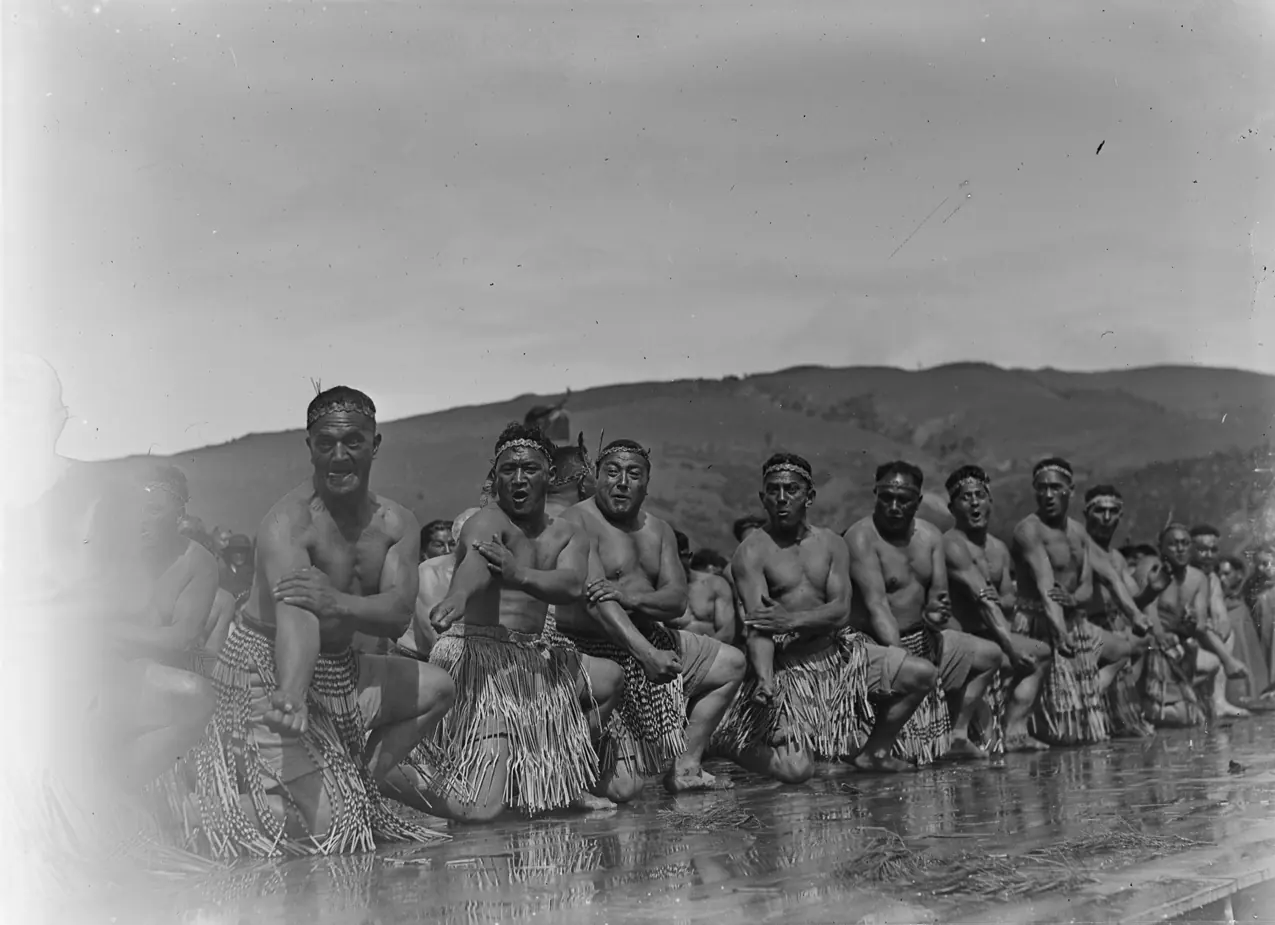
Haka are a variety of ceremonial dances in Māori culture. As a performance art, haka are often performed by a group, with vigorous movements and stamping of the feet with rhythmically shouted accompaniment. They have traditionally been performed by both men and women for a variety of social functions. The body serves as the instrument and the vessel of delivery, and the key aspect is the words and the message they contain. The museum calls the haka a well-known and powerful ritual.
Where Māori tradition says it began
According to Māori tradition, the haka originated from a creation story. The sun god, Tama-nui-te-rā, had two wives, the Summer Maid, Hine-raumati, and the Winter Maid, Hine-takurua. Haka originated in the coming of Hine-raumati, whose presence on still, hot days was revealed in a quivering appearance in the air. This was the haka of Tāne-rore, the son of Hine-raumati and Tama-nui-te-rā. On this account, the haka is a natural phenomenon as well as a dance: the shimmering of the air on a hot summer day.
Not only a war dance
Haka are popularly associated with the battle preparations of male warriors, but conceptions that haka are typically war dances are considered erroneous by Māori scholars. Their functions include welcoming guests, farewelling and mourning the deceased, giving advice or instructions, restoring self-respect, intimidating adversaries and transmitting social and political messages. The peruperu is a war haka that uses weapons, while the haka taparahi is performed without weapons and is the more common ceremonial form.
Read next: Kapa haka explained
What you see and hear
Haka use facial contortions such as showing the whites of the eyes, called pūkana, and poking out the tongue, called whetero, which is performed by men only. A wide variety of vigorous body actions accompany them, such as slapping the hands against the body and stomping the feet. In the museum's Māori cultural performance, the haka's origins, traditional uses and differences are explained, so the challenge is introduced before it is performed. Listen for the words as well as the movement, because the words carry the message.
The haka beyond the stage
The New Zealand rugby union team's practice of performing a haka before international matches has made the dance form more widely known around the world. That familiarity is one reason the haka is so often reduced to a challenge before a game. In Māori culture it is a much wider form, performed for many social functions, and the museum's session introduces the haka's origins, traditional uses and differences. Seeing it explained in the place where it is performed, rather than on a television screen, is the point of the session.
Watching with respect
Non-traditional or inaccurate haka performances have been criticised by Māori academics, and some Māori leaders have objected to casual imitations. The museum says its Māori performance is tapu and briefs visitors on protocols before they enter the auditorium, so the practical rule is to take the briefing seriously. Watch, listen and let the hosts decide whether visitors may take part. Do not copy the movements or the facial expressions outside the session, since the museum asks visitors to respect and preserve customs and traditions.
Frequently asked questions
Is the haka a war dance?
Haka are often described as war dances, but Māori scholars consider that idea erroneous. Haka are also used to welcome guests, honour achievements and mark funerals.
Who performs the haka?
Haka have traditionally been performed by both men and women for a variety of social functions.
Will the haka be explained in the museum's performance?
Yes. The museum says the session explains the origins, traditional uses and differences of the haka.
Sources